

• Home
  • Pregnancy Tips
  • Baby Tips
  • Baby Health
  • Adoption Tips
  • Mom Tips
  • Baby Accessories
  • Videos
  • About Us

Archives

  • February 2026
  • January 2026
  • December 2025
  • November 2025
  • October 2025
  • September 2025
  • August 2025
  • July 2025
  • May 2025

Categories

  • Adoption Tips
  • Baby Accessories
  • Baby Health
  • Baby Tips
  • Mom Tips
  • Pregnancy Tips
  • Uncategorized
  • Videos
OhBabyCare
OhBabyCare
  • Home
  • Pregnancy Tips
  • Baby Tips
  • Baby Health
  • Adoption Tips
  • Mom Tips
  • Baby Accessories
  • Videos
  • About Us
How Often Should You Feed a Newborn? A Simple Guide
  • Baby Tips

How Often Should You Feed a Newborn? A Simple Guide

  • February 9, 2026
  • Baby Tips
Total
0
Shares
0
0
0
Total
0
Shares
Share 0
Tweet 0
Pin it 0

You brought home a tiny human who eats, sleeps, and stares at you like you’re their personal room service. So how often do you feed this adorable boss? Short answer: a lot. But there’s a rhythm to it, and once you learn the cues, you’ll feel less like you’re guessing and more like you’re actually running the show. Let’s break it down simply, without the guilt or the jargon.

Table of Contents

Toggle
  • What “Often” Really Means in the Newborn Stage
    • Breastfeeding vs. Formula: The Timing
  • Follow the Baby, Not the Clock
    • Hunger Cues to Watch For
  • How Much Should They Eat?
    • If You’re Breastfeeding
    • If You’re Formula Feeding
  • Nights: To Wake or Not to Wake?
  • How You Know Your Baby Gets Enough
    • Diaper Math
    • Baby Behavior
    • Weight Gain
  • Growth Spurts and Cluster Feeding: The Plot Twists
  • Real-Life Tips to Keep Feeding Sane
    • Set Up a Feeding Nest
    • Master Burping
    • Protect Your Supply (Breastfeeding)
    • Paced Bottle Feeding 101
  • FAQs
    • Should I put my newborn on a strict feeding schedule?
    • How long should a breastfeed last?
    • Can I overfeed a newborn?
    • Do I need to wake my baby to feed at night?
    • Why is my baby feeding all evening?
    • What if my baby never seems satisfied?
  • The Bottom Line
  • EXPLORE MORE ON OHBABYCARE

What “Often” Really Means in the Newborn Stage

Newborns have tiny stomachs and fast metabolisms. They burn through milk like it’s their job—because it is. For the first few weeks, expect to feed your baby 8–12 times in 24 hours.
That usually works out to every 2–3 hours, sometimes even more frequently during cluster feeding sessions. And yes, cluster feeding is a thing. It’s normal. It’s exhausting. It passes.

Breastfeeding vs. Formula: The Timing

– Breastfed babies: Usually every 2–3 hours. Breastmilk digests quicker.
– Formula-fed babies: Usually every 3–4 hours. Formula digests a bit slower.
Neither is “better” for timing—just different. You’ll learn your baby’s groove fast.

Follow the Baby, Not the Clock

Babies don’t read schedules. Instead of staring at your phone’s timer like it’s mission command, watch your baby’s cues. Early hunger cues make life easier for both of you.

Hunger Cues to Watch For

  • Rooting or turning head toward your hand or chest
  • Lip smacking, sucking on hands, tongue going
  • Fidgeting, mild fussing
  • Alert, wide-eyed stare that says “I’m thinking about lunch”

Crying is a late sign. If they’re already crying hard, they may need calming before they can latch or take a bottle.

How Much Should They Eat?

sleepy newborn feeding every 2–3 hours, soft window light

Amounts can vary, and that’s okay. Newborns aren’t robots. But some ballpark guidelines help.

If You’re Breastfeeding

– In the first week, aim for 10–20 minutes per breast as a general starting point. Some babies finish in 10; others take 30. Chill.
– Count feeds, not minutes. If you get 8–12 good feeds in a day and baby seems satisfied, you’re doing great.
– Expect frequent feeds during late afternoon/evening—cluster feeding helps build supply.

If You’re Formula Feeding

– Day 1: tiny sips—5–15 mL (0.2–0.5 oz) per feed.
– By 1 week: 45–90 mL (1.5–3 oz) per feed every 3–4 hours.
– By 1 month: many babies take 90–120 mL (3–4 oz) per feed.
Pro tip: Use paced bottle feeding so baby controls the flow and prevents overfeeding.

Nights: To Wake or Not to Wake?

Sleep is precious, but so is growth. In the first couple of weeks, many babies need help maintaining frequent feeds.
– If your baby is gaining weight well, has plenty of wet/dirty diapers, and your pediatrician says all good, you can let them sleep and follow their cues.
– If they’re still regaining birth weight or you’re working on supply, wake them every 3 hours at night for a feed until your provider gives the green light.
Bottom line: In the early days, protecting intake and weight gain matters more than long stretches of sleep. IMO, it’s worth it.

How You Know Your Baby Gets Enough

Since your baby can’t text “I’m full,” you’ll use the classic checkpoints instead. Luckily, they’re simple.

Diaper Math

– Day 1: 1 wet, 1 meconium poop
– Day 2: 2 wets, 2 poops
– Day 3–4: 3–4 wets, 2–3 poops (transitioning to yellow, seedy stools if breastfeeding)
– After Day 5: 6+ wets and at least 1–3 poops daily (some formula-fed babies poop less often; that can be normal)

Baby Behavior

– Feeds start strong, then slow and relax
– Hands unclench, body looks looser
– They unlatch/doze off content, not frustrated

Weight Gain

– Normal to lose up to about 7–10% of birth weight in the first few days
– Back to birth weight by about 10–14 days
– Then gain roughly 20–30 grams (0.7–1 oz) per day for the first few months
If something feels off, trust your gut and check in with your pediatrician or a lactation consultant. FYI, you’re not “overreacting.” You’re parenting.

Growth Spurts and Cluster Feeding: The Plot Twists
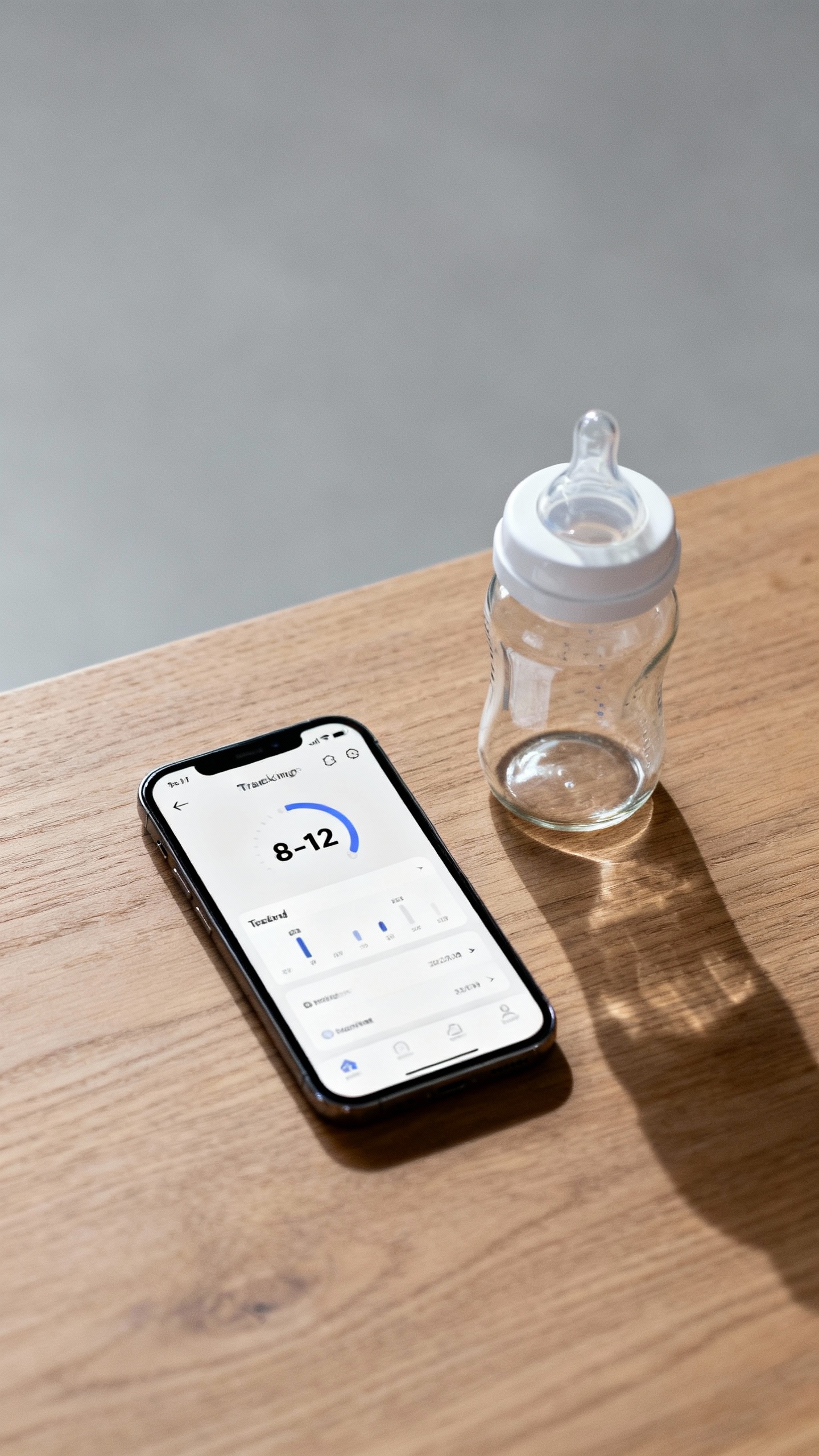
parent tracking 8–12 feeds on phone app beside bottle

Just when you think you’ve got a rhythm, your baby decides to level up. Growth spurts often hit around 2–3 weeks, 6 weeks, and 3 months (give or take). Expect:

  • More frequent feeds (sometimes hourly)
  • Crankiness and clinginess
  • Short naps and long evenings

It’s temporary. Feed on demand, stay hydrated, and tag in a partner if you’ve got one. You’ve got this.

Real-Life Tips to Keep Feeding Sane

Because you’re feeding a lot. Like, a lot a lot.

Set Up a Feeding Nest

– Water bottle, snacks, burp cloths, extra pillows
– Phone charger, remote, and a book you’ll pretend to read
– Good lighting for nighttime latch checks

Master Burping

– Try different positions: over-the-shoulder, sitting upright, tummy across your forearm
– Burp mid-feed and at the end, especially for bottle-fed babies

Protect Your Supply (Breastfeeding)

– Frequent feeds build supply—respond to cues
– If you miss a feed, consider pumping to keep things even
– If latch hurts, get help fast; pain isn’t a price you must pay

Paced Bottle Feeding 101

– Hold baby semi-upright
– Keep bottle horizontal so milk flows slower
– Let baby pause often; switch sides to mimic breastfeeding rhythm

FAQs

Should I put my newborn on a strict feeding schedule?

Not at first. Newborns thrive with responsive feeding. A rhythm will emerge naturally after a few weeks. If you love structure, you can track feeds and naps, but don’t force timing that ignores hunger cues.

How long should a breastfeed last?

Anywhere from 10 to 40 minutes total can be normal. Focus on effective sucking and swallowing at the start of the feed. If latching hurts or feeds take ages with little swallowing, get lactation support sooner than later—saves time and sanity.

Can I overfeed a newborn?

With breastfeeding, overfeeding rarely happens because babies regulate intake well. With bottles, faster flow can push them to drink more than they need. Use a slow-flow nipple and paced feeding. Watch for cues like turning away or relaxed hands—respect the “I’m done.”

Do I need to wake my baby to feed at night?

In the early days, often yes—until they regain birth weight and your pediatrician gives you the okay. After that, let them sleep and follow their cues. If you’re pumping or working on supply, one night session may still help.

Why is my baby feeding all evening?

Welcome to cluster feeding. Babies tank up, your body boosts supply, and evenings get… lively. It’s normal and temporary. Grab snacks, queue a show, and get comfy. IMO, set a mental “closing time” and pass baby to a partner for burping and walking when you need a breather.

What if my baby never seems satisfied?

Check the basics: latch, milk transfer, diaper counts, and weight gain. Consider a weighted feed with a lactation consultant. Sometimes babies want comfort, not volume—try skin-to-skin, a pacifier (if breastfeeding is established), or a change of scenery.

The Bottom Line

Newborns eat frequently—8–12 times a day—because tiny tummies and big growth spurts demand it. Watch cues more than clocks, keep an eye on diapers and weight, and adjust for days when they cluster feed like they’re carbo-loading for a marathon. You’ll find your rhythm. And when in doubt, ask for help—feeding your baby is a team sport, not a solo quest.


EXPLORE MORE ON OHBABYCARE

Gentle guidance and must-know advice inside

PREGNANCY TIPS

Everyday routines, sleep, feeding, and calm support in

BABY TIPS

Healthy habits, wellness, and baby care insights inside

BABY HEALTH

Real-life mom life, balance, and emotional support in

MOM TIPS

Product picks, essentials, and honest recommendations in

BABY ACCESSORIES

Kind, thoughtful guidance and resources inside

ADOPTION TIPS

Helpful how-to’s, routines, and real moments in

VIDEOS

Total
0
Shares
Share 0
Tweet 0
Pin it 0
Related Topics
  • baby feeding frequency
  • feeding tips for new parents
  • how often to feed a newborn
  • newborn feeding guide
  • newborn feeding schedule
Baby Tips

Previous Article
10 Survival Tips for Exhausted Moms
  • Mom Tips

10 Survival Tips for Exhausted Moms

  • February 5, 2026
  • Baby Tips
Read More
You May Also Like
7 Baby Care Mistakes New Parents Make Without Realizing It
Read More
  • Baby Tips

7 Baby Care Mistakes New Parents Make Without Realizing It

  • Baby Tips
  • January 19, 2026
Baby Training Tips: Easy Steps for Happy Little Learners
Read More
  • Baby Tips

Baby Training Tips: Easy Steps for Happy Little Learners

  • Baby Tips
  • December 25, 2025
Baby for Newbies: Your Go-To Guide for First-Time Parents
Read More
  • Baby Tips

Baby for Newbies: Your Go-To Guide for First-Time Parents

  • Baby Tips
  • December 24, 2025
New Parents? Baby Tips You’ll Wish You Knew Sooner!
Read More
  • Baby Tips

New Parents? Baby Tips You’ll Wish You Knew Sooner!

  • Baby Tips
  • December 23, 2025
10 Must-Know Baby Tips Every New Parent Should Try!
Read More
  • Baby Tips

10 Must-Know Baby Tips Every New Parent Should Try!

  • Baby Tips
  • December 20, 2025
Baby Training 101: Fun Tips to Help Your Little One Learn
Read More
  • Baby Tips

Baby Training 101: Fun Tips to Help Your Little One Learn

  • Baby Tips
  • December 3, 2025
Must-Know Baby Tips Every New Parent Should Try Today!
Read More
  • Baby Tips

Must-Know Baby Tips Every New Parent Should Try Today!

  • Baby Tips
  • November 19, 2025
Baby for Newbies: Easy Tips to Rock Your First Year!
Read More
  • Baby Tips

Baby for Newbies: Easy Tips to Rock Your First Year!

  • Baby Tips
  • November 13, 2025

Leave a Reply Cancel reply

Your email address will not be published. Required fields are marked *

Baby Memory Book cover
FREE PRINTABLE 💙💗
Baby Memory Book

Capture first-year moments, photos & sweet notes — printable PDF.

Get it now ✨
No spam. Cozy tips only 🤍
My Pregnancy Journal cover
FREE PRINTABLE 💗
My Pregnancy Journal

Weekly reflections + milestones — a gentle printable keepsake.

Send me it 💌
Instant access via Beacons ✨

Recent Posts

  • How Often Should You Feed a Newborn? A Simple Guide
  • 10 Survival Tips for Exhausted Moms
  • Adoption vs Biological Parenting: What’s Really Different?
  • Things You Don’t Need for Your Baby (Save Your Money!)
  • Baby Registry Must-Haves: What to Put on Your List
Featured Posts
  • How Often Should You Feed a Newborn? A Simple Guide 1
    How Often Should You Feed a Newborn? A Simple Guide
    • February 9, 2026
  • 10 Survival Tips for Exhausted Moms 2
    10 Survival Tips for Exhausted Moms
    • February 5, 2026
  • Adoption vs Biological Parenting: What’s Really Different? 3
    Adoption vs Biological Parenting: What’s Really Different?
    • February 2, 2026
  • Things You Don’t Need for Your Baby (Save Your Money!) 4
    Things You Don’t Need for Your Baby (Save Your Money!)
    • January 29, 2026
  • Baby Registry Must-Haves: What to Put on Your List 5
    Baby Registry Must-Haves: What to Put on Your List
    • January 26, 2026
Recent Posts
  • Pregnancy Symptoms That Are Totally Normal (But Scary at First)
    Pregnancy Symptoms That Are Totally Normal (But Scary at First)
    • January 22, 2026
  • 7 Baby Care Mistakes New Parents Make Without Realizing It
    7 Baby Care Mistakes New Parents Make Without Realizing It
    • January 19, 2026
  • Common Baby Rashes and What They Mean
    Common Baby Rashes and What They Mean
    • January 15, 2026
Categories
  • Adoption Tips (9)
  • Baby Accessories (7)
  • Baby Health (9)
  • Baby Tips (16)
  • Mom Tips (11)
  • Pregnancy Tips (18)
  • Uncategorized (3)
  • Videos (196)
🍼
Hosting I use
OhBabyCare is hosted on Hostinger

If you’re starting a parenting blog or moving your website, Hostinger is a simple and reliable choice. Fast setup, great value, and beginner-friendly tools.

Get Hostinger → Affiliate disclosure: I may earn a commission at no extra cost to you.
✨ Oh Baby Care
Gentle inspiration

Soft care tips, honest picks & sweet ideas—delivered to your inbox.

💌 Join Newsletter
No spam • Unsubscribe anytime
OhBabyCare
  • Privacy Policy
  • DMCA
  • Terms of Use
  • Affiliate Disclosure
  • Imprint
  • Contact Us
  • Cookie Policy (EU)
Baby Tips & Advices

Input your search keywords and press Enter.

Manage Consent
To provide the best experiences, we use technologies like cookies to store and/or access device information. Consenting to these technologies will allow us to process data such as browsing behavior or unique IDs on this site. Not consenting or withdrawing consent, may adversely affect certain features and functions.
Functional Always active
The technical storage or access is strictly necessary for the legitimate purpose of enabling the use of a specific service explicitly requested by the subscriber or user, or for the sole purpose of carrying out the transmission of a communication over an electronic communications network.
Preferences
The technical storage or access is necessary for the legitimate purpose of storing preferences that are not requested by the subscriber or user.
Statistics
The technical storage or access that is used exclusively for statistical purposes. The technical storage or access that is used exclusively for anonymous statistical purposes. Without a subpoena, voluntary compliance on the part of your Internet Service Provider, or additional records from a third party, information stored or retrieved for this purpose alone cannot usually be used to identify you.
Marketing
The technical storage or access is required to create user profiles to send advertising, or to track the user on a website or across several websites for similar marketing purposes.
  • Manage options
  • Manage services
  • Manage {vendor_count} vendors
  • Read more about these purposes
View preferences
  • {title}
  • {title}
  • {title}

Powered by
...
►
Necessary cookies enable essential site features like secure log-ins and consent preference adjustments. They do not store personal data.
None
►
Functional cookies support features like content sharing on social media, collecting feedback, and enabling third-party tools.
None
►
Analytical cookies track visitor interactions, providing insights on metrics like visitor count, bounce rate, and traffic sources.
None
►
Advertisement cookies deliver personalized ads based on your previous visits and analyze the effectiveness of ad campaigns.
None
►
Unclassified cookies are cookies that we are in the process of classifying, together with the providers of individual cookies.
None
Powered by