You want to know how long adoption takes? Short answer: longer than you wish, shorter than your worst nightmare. The process runs on paperwork, patience, and a surprising amount of waiting. But you can absolutely do this with the right expectations—and a decent snack strategy. Let’s walk through a realistic timeline (with fewer buzzwords and more real talk).
The Big Picture: Typical Timelines by Adoption Type
You’ll see very different timelines depending on the route you choose. No path counts as “fast” per se, but some move quicker than others.
- Domestic infant adoption: About 12–24 months on average, from application to placement. The match stage pulls the most weight here.
- Foster care adoption: 6–18 months if adopting a legally free child; 1–3 years (or more) if you foster first and wait for termination of parental rights (TPR).
- International adoption: 18–36+ months, depending on the country, age of child, and program stability.
Reality check: You’ll hear stories about lightning-fast matches and multi-year odysseys. Both happen. IMO, the safest mindset is “plan for the average, prepare for detours.”
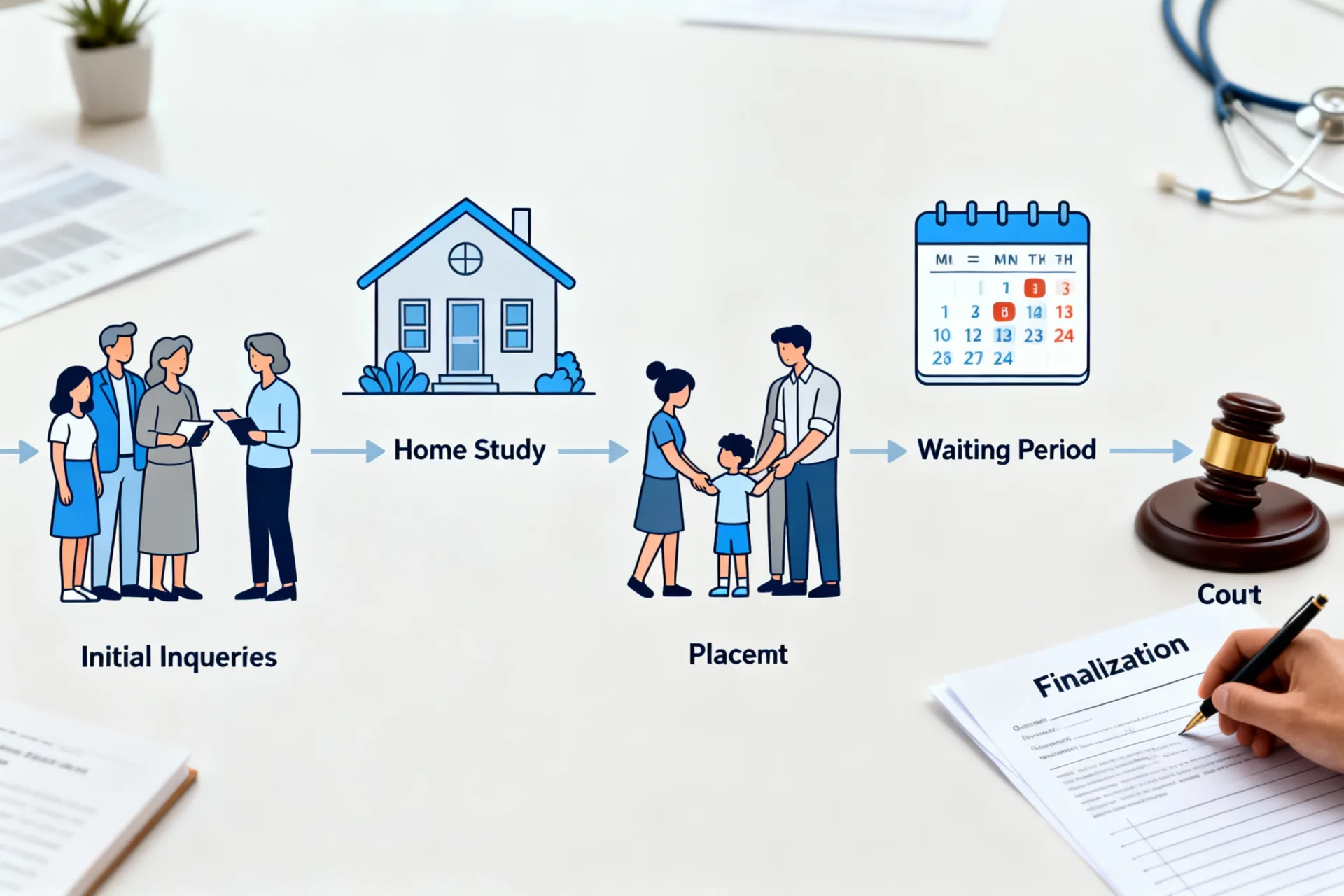
Phase 1: Research, Agency Shopping, and Applications (2–8 weeks)

This is the “Are we really doing this?” phase. You’ll compare agencies or attorneys, read reviews, and ask weirdly specific questions like “Do you answer emails on Fridays?”
- Choose your route (domestic, foster, international) and shortlist professionals.
- Attend info sessions and ask about average timelines, costs, openness levels, and support after placement.
- Complete initial applications and cut a few checks. FYI: agencies move faster when you do.
What speeds this up?
- Quick responses and organized paperwork (yes, your printer matters now).
- Picking an agency with active programs and realistic timelines.
- Flexibility around child characteristics (age, race, openness). More flexibility usually means shorter waits.
Phase 2: Home Study and Training (1–4 months)
Think of the home study as your “adoption license.” It checks your background, home safety, finances, health, and readiness. It also prepares you for the realities of adoption, not just the cute Instagram moments.
- Paperwork + background checks: Medical forms, references, fingerprints, financial statements.
- Interviews and home visits: A social worker meets you at home (no white gloves, promise).
- Education requirements: Courses on trauma, openness, transracial adoption, etc.
Pro tip
Schedule everything early and in clusters. Doctors, fingerprints, notaries—batch it like a productivity nerd. You’ll shave weeks off.
Phase 3: Profile Building and Matching (Varies widely)

Now the waiting gets real. You’ll build a profile book or website that tells your story to expectant parents (domestic) or waits in a queue for a referral (international). Foster adoption varies—sometimes you match with a legally free child through a caseworker or photo listing.
- Domestic infant adoption: Matching can happen in weeks or many months. The more open you feel about background factors or openness agreements, the faster it tends to go.
- International adoption: You await a referral from your country program after dossier approval.
- Foster care adoption: If you adopt a legally free child, matching can happen within a few months; if fostering first, timelines depend heavily on the court process.
Make your profile stand out
- Use clear photos and show your life, not a staged catalog. Joy > perfection.
- Write like a human. Speak directly, keep it warm and respectful.
- Explain your support system. People want to see a village, not a vibe.
Phase 4: Legal Steps and Placement (Weeks to months)
This phase depends heavily on where you live and what type of adoption you’re pursuing.
- Domestic infant adoption: After birth and consent, you bring baby home if laws allow. Interstate placements trigger ICPC, which adds 1–3 weeks of waiting in the birth state (hello, extended hotel stay).
- Foster care adoption: If adopting from foster care, you’ll likely have visits that ramp up to placement. If fostering first, you’ll wait for TPR and concurrent planning to resolve.
- International adoption: Travel for court or embassy appointments happens after your referral is approved. One or two trips, depending on the country.
Key note: Legal timelines vary by state, country, and case specifics. I know, that sounds like a cop-out. It’s not. It’s the honest truth.
ICPC, TPR, and other alphabet soup
- ICPC: Interstate Compact on the Placement of Children. You wait for both states to approve before traveling home with a domestic placement.
- TPR: Termination of Parental Rights. Required before adoption can finalize (applies to foster and domestic cases).
Phase 5: Post-Placement Visits and Finalization (3–12 months after placement)

You’ve got a child in your home—congrats! You’re not legally a forever family yet, though. A social worker will visit a few times to make sure things go well, then your attorney schedules a finalization hearing.
- Domestic infant and foster care: Finalization often happens 3–12 months after placement.
- International adoption: Some countries finalize abroad; others require re-finalization or recognition in your home state.
Pro tip: Put the finalization hearing date on your calendar like a national holiday. It’s your “we did the thing” day.
What Actually Affects the Timeline?
Every adoption is unique, but these levers move things faster—or slower.
- Flexibility: Age, sibling groups, special needs, openness. Broader preferences = more opportunities.
- Agency capacity: Some agencies have long waitlists; some don’t. Ask about current match numbers.
- Paperwork speed: Yours and everyone else’s. If you turn forms in fast, you help your own cause.
- Legal complexities: Interstate cases, contested adoptions, court backlogs, international program changes.
- Geography: State laws and country regulations vary wildly.
Red flags that slow things down
- Agencies that overpromise “fast matches.” If it sounds magical, it’s probably marketing.
- Incomplete home study documents (checklists are your friends).
- Unclear preferences or frequent changes mid-process.
Sample Timelines You Can Actually Picture
Not guarantees—just realistic scenarios.
Domestic Infant Adoption (18 months total)
- Month 1: Agency selection + application
- Months 2–4: Home study + training
- Months 5–14: Matching wait (could be shorter or longer)
- Month 15: Birth + ICPC (if interstate) 1–3 weeks
- Months 16–18: Post-placement + finalization
Foster Care Adoption of a Legally Free Child (9–15 months)
- Months 1–3: Orientation, training, home study
- Months 4–6: Matching and transition visits
- Months 7–12: Placement and post-placement supervision
- Months 12–15: Finalization
International Adoption (24–36 months)
- Months 1–4: Agency selection, home study
- Months 5–8: Dossier prep and country approval
- Months 9–24+: Referral wait
- Months 18–30+: Travel, court/embassy
- Months 20–36+: Post-placement reports and/or re-finalization
FYI: International programs can change midstream. Build emotional buffer room. And a spreadsheet.
FAQ
Can we speed up the adoption process without cutting corners?
Yes. Complete your paperwork fast, respond to emails within 24 hours, and keep your preferences flexible. Choose an agency with active programs and ask about their current match numbers, not last year’s brochure stats.
What if a match falls through?
It happens. It hurts. Lean on your support system and your agency’s counseling resources. Most families match again; your home study stays valid for a period (usually one year), but you might update it if timing stretches out.
Do we need a lawyer, or does the agency handle that?
For domestic infant adoption, agencies often coordinate legal counsel, but you still need your own attorney in many cases. For foster care adoption, the state may provide legal help. For international, your agency and in-country partners navigate most steps, with some stateside legal work later.
How long after placement until finalization?
Plan on 3–12 months. You’ll complete post-placement visits and your attorney will schedule court. Some courts book quickly; others take a while (judge calendars are a vibe).
Will being open to transracial adoption change the timeline?
Often, yes. More openness around race, age, sibling groups, and background factors can shorten wait times. The flip side: commit to lifelong learning and support—transracial adoption asks more of you, and your child deserves that preparedness.
What about maternity/paternity leave timing?
For domestic infant adoption, alert your employer that timing might be unpredictable. For foster care, leave often starts at placement. For international, plan for travel plus post-travel transition. Put flexibility in writing if possible.
Wrapping It Up
Adoption takes time—sometimes a lot. But you can control your paperwork pace, your expectations, and who you hire. Keep your schedule flexible, your inbox open, and your sense of humor intact. The waiting won’t last forever, and, IMO, the day you finalize makes every form, fingerprint, and hotel breakfast totally worth it.
EXPLORE MORE ON OHBABYCARE
Gentle guidance, early symptoms, and what to expect during pregnancy
PREGNANCY TIPSDaily baby routines, sleep tips, feeding guides, and calming techniques
BABY TIPSBaby health, safety, wellness, and expert-backed care advice
BABY HEALTHReal mom life, emotional support, recovery, and parenting balance
MOM TIPSMust-have baby accessories, practical tips, and everyday essentials
BABY ACCESSORIESHelpful adoption guidance, emotional support, and family preparation
ADOPTION TIPSTop-rated baby products, must-have essentials, and honest reviews
BEST BABY PRODUCTSHelpful videos, tutorials, routines, and real parenting moments
VIDEOS