
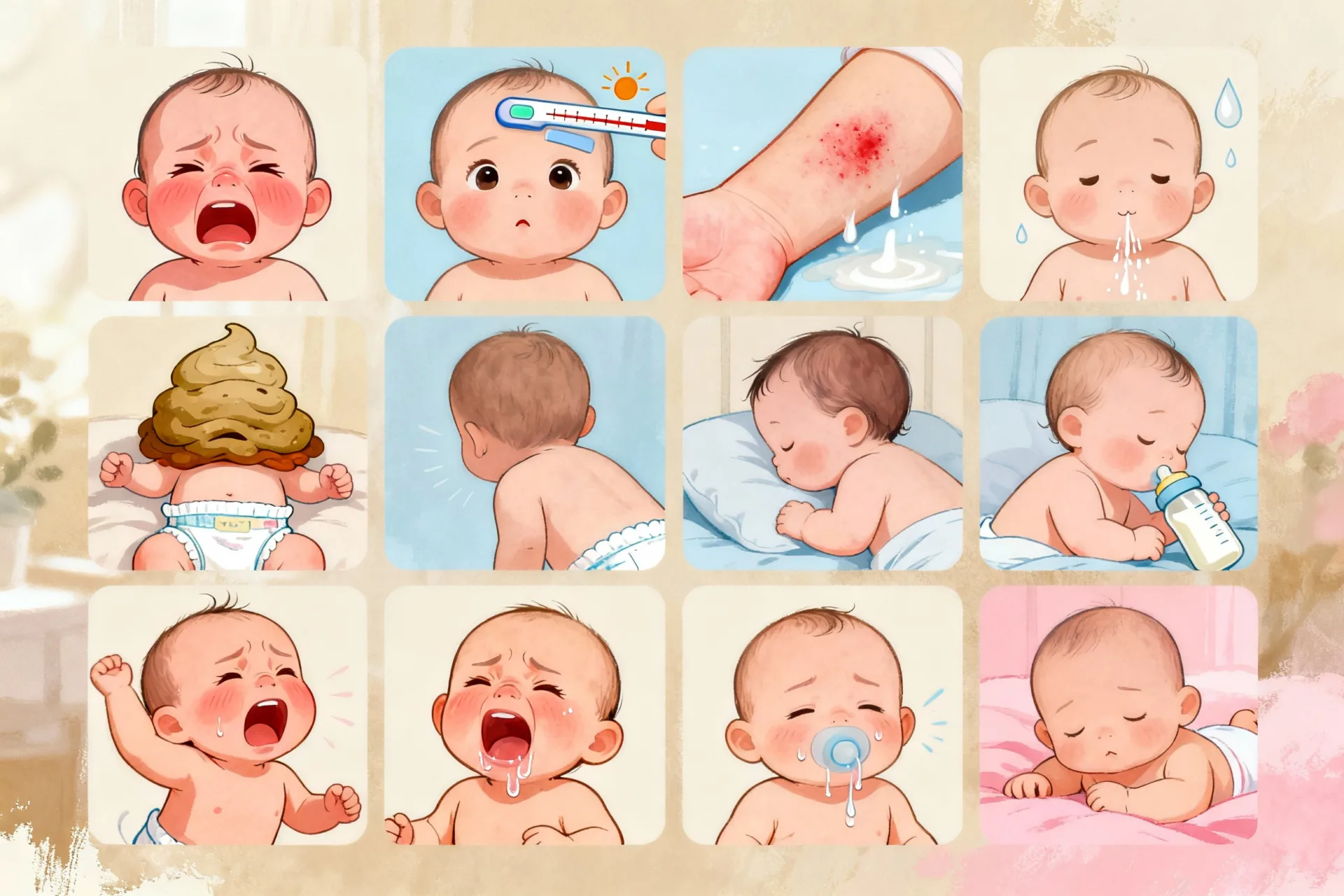
You know that “Is this normal?” reflex that fires every time your baby hiccups, sneezes, or looks at you funny? Welcome to parenthood. Babies come with a grab bag of quirky symptoms that freak adults out—but most are harmless. Let’s walk through the biggies so you can breathe, laugh a little, and only call the pediatrician when it actually matters.
Weird Breathing That Sounds Like a Tiny Accordion
Newborns breathe like they’re practicing dramatic monologues. Fast, slow, pause, snort—repeat. It’s called periodic breathing, and it’s normal.
- What you’ll see: Fast breaths, short pauses (under 10 seconds), little grunts.
- When to relax: Color stays pink, baby wakes easily, no chest-pulling or flaring nostrils.
- When to call: Blue or gray lips, pauses longer than 10 seconds, ribs sucking in, or nonstop grunting.
FYI: Noisy Nose ≠ Sick Baby
Narrow baby nostrils and dry air make them sound snuffly. A saline drop and a quick suction usually does the trick. Don’t go mining up there daily—irritation makes it worse.
Hiccups, Sneezes, and Random Shivers
Your baby is not cold or possessed. These are reflexes, and they happen a lot.
- Hiccups: Common after feeds. Try a burp break or a slower-flow nipple.
- Sneezes: Self-cleaning noses at work. No fever + no fuss = no problem.
- Shivers/Startles: The Moro reflex. Swaddle for sleep and watch the drama disappear.
Spit-Up vs. Vomit: The Eternal Mystery
Babies spit up. Sometimes they spit up again. Sometimes again after that. It’s gravity plus an immature valve.
- Normal spit-up: Milk dribble after feeds, baby stays happy and gains weight.
- Concerning vomit: Forceful, green or bloody, or baby looks miserable and refuses to feed.
Pro tip: Keep feeds upright, burp halfway, and don’t bounce them like a pogo stick after meals.
When Reflux Needs Help
If baby arches their back, coughs during feeds, or has poor weight gain, talk to your pediatrician. Mild reflux is common; severe reflux deserves a plan.
Mysterious Baby Rashes That Show Up Overnight
Skin drama? Babies are pros. Most rashes look scary and mean nothing.
- Baby acne: Red bumps on face around weeks 2–6. Totally normal. Don’t pick, just cleanse gently.
- Erythema toxicum: Fancy name, harmless splotches. Comes and goes like it owns the place.
- Cradle cap: Flaky, yellow scalp patches. Use gentle shampoo and a soft brush. Oil beforehand if needed.
- Heat rash: Tiny red bumps in skin folds. Cool them down and ditch extra layers.
Call if: The rash comes with fever, blisters, weeping skin, or your baby seems unwell.
Poop Spectaculars: Colors, Textures, and Explosions
You didn’t plan to care about poop this much, but here we are. And yes, it’s a whole rainbow.
- Mustard yellow with seeds: Breastfed baby classic.
- Tan or brown: Formula-fed normal.
- Green: Often normal; could be iron or foremilk/hindmilk imbalance.
- Black/tarry (after day 3) or white/gray: Call your pediatrician.
Frequency FYI
Newborns can poop after every feed or skip days once they’re older—both normal if baby is comfy. Straining doesn’t always mean constipation; they’re learning how to do this. Blood or hard pellets? Talk to your doctor.
Fevers, Cold Hands, and Other Temperature Drama
Babies run warm and cold in weird places. Hands and feet often feel chilly even when everything’s fine. Layers matter more than your own internal thermostat.
- Real fever: Rectal temp of 100.4°F (38°C) or higher.
- Under 3 months with fever: Call your pediatrician ASAP. That’s not a “wait and see.”
- No fever but warm head: Overdressed. Remove a layer and chill (you and the baby).
Jaundice: Why Your Baby Looks Like a Lemon
Many newborns get jaundice—a yellow tinge to skin and eyes—because their livers are still booting up. It usually peaks around day 3 to 5.
- Mild jaundice: Baby feeds well, stays alert, and the yellowing fades by 2 weeks.
- Call if: Yellow spreads to legs, baby is very sleepy or hard to wake, isn’t feeding well, or jaundice appears after 2 weeks.
Sunbathing Myth Bust
Please don’t put your newborn in a sunny window “for jaundice.” Feed often and follow your doctor’s plan. Sometimes they recommend phototherapy—aka a medically supervised light spa day.
Strange Movements: Twitching, Tremors, and Eye Rolls
Newborn nervous systems act like they’re on dial-up. You’ll see jerky arms, lip quivers, and random twitches—especially when sleepy or after feeding.
- Normal: Brief, stops when you gently hold the limb, baby stays alert afterward.
- Call ASAP: Rhythmic jerking that doesn’t stop, eyes deviate or roll, stiff body, or baby stays unresponsive after.
Teething Turmoil (and the Slobber Flood)
Drool city begins around 3–4 months, and teeth usually show up around 6 months. Some babies breeze through; others act like tiny dragons.
- What helps: Chilled (not frozen) teething rings, a clean finger massage, extra cuddles.
- What to skip: Numbing gels with benzocaine, amber necklaces, or anything that looks like a choking hazard.
Red flag: High fever, severe diarrhea, or persistent ear tugging usually isn’t “just teething.” Check in with your doc.
Feeding Freak-outs: Cluster Feeding and “I’m Not Making Enough” Panic
Babies love to cluster feed, especially in the evening. It doesn’t mean you “don’t have milk.” It usually means a growth spurt or comfort needs.
- Signs baby gets enough: 6+ wet diapers/day after day 5, steady weight gain, content periods between feeds.
- When to ask for help: Painful latch, poor weight gain, or marathon feeds with no satisfaction. A lactation consultant can be gold, IMO.
Bottle Quirks
Try different nipple flows. If milk pours out and baby coughs, the flow is too fast. If baby fights the bottle and collapses in frustration, go up a level.
Little Lumps, Boobs, and Down-There Surprises
Hormones from pregnancy stick around and cause some oddities.
- Breast buds: Small lumps on chest in boys or girls—normal, temporary.
- Vaginal discharge or mini “period” in girls: Hormone withdrawal. Should be light and short-lived.
- Swollen scrotum in boys: Common fluid collection (hydrocele). Ask your doc to check at routine visits.
Seek care if: Redness, warmth, severe swelling, or pain show up anywhere.
Sleep That Feels Like a Roller Coaster
Newborns sleep in weird, short chunks. They don’t know day from night. You will survive.
- Normal: 14–17 total hours in 24, often in 2–4 hour stretches.
- Help them: Bright days, calm nights, feed often, and safe sleep every time.
Safe Sleep Basics
Back to sleep, firm flat surface, no pillows/blankets/bumpers, room-share but don’t bed-share, avoid overheating. Unsexy but lifesaving.
FAQ
When should I worry about a fever?
Any rectal temperature of 100.4°F (38°C) or higher in a baby under 3 months deserves an immediate call to your pediatrician. Over 3 months, call if fever lasts more than 3 days, hits 104°F (40°C), or comes with lethargy, trouble breathing, rash, dehydration, or persistent vomiting.
Is green poop a sign of infection?
Usually no. Green can result from iron, foremilk/hindmilk differences, or just normal variation. If you see white, gray, or black tarry stools after the newborn period, or there’s blood, call your doctor.
How do I know if spit-up is too much?
If baby seems content, feeds well, and gains weight, the laundry pile is the only problem. Concern starts with forceful vomiting, poor weight gain, refusal to feed, blood or green color in vomit, or signs of pain during feeds.
My baby’s breathing pauses—should I panic?
Short pauses under 10 seconds with no color change are common. Panic? No. Watchful eye? Yes. If you see blue lips, long pauses, or chest retractions, seek care immediately.
Can teething cause fever and diarrhea?
Teething can cause drool, chewing, and crankiness. It doesn’t typically cause high fever or significant diarrhea. If your baby runs a real fever or has ongoing GI issues, look for another cause.
When is a rash an emergency?
If a rash appears with fever, rapid spreading, blisters, purple spots that don’t blanch, or your baby seems very unwell, get medical care. Otherwise, most baby rashes look worse than they are.
Bottom Line
Babies are weird, adorable mystery machines. Most “scary” symptoms show up as part of normal development and pass on their own. Trust your gut, learn the red flags, and keep your pediatrician on speed dial for the real stuff. And hey—if you’re googling at 3 a.m., you’re already doing great, FYI.
EXPLORE MORE ON OHBABYCARE
Gentle guidance, early symptoms, and what to expect during pregnancy
PREGNANCYDaily baby routines, practical care tips, and support for first-time parents
BABY CAREBaby health, safety, wellness, and expert-backed care advice
BABY HEALTHTop-rated baby products, must-have essentials, and honest reviews
BEST BABY PRODUCTSMust-have baby accessories, practical tips, and everyday essentials
BABY ACCESSORIESReal mom life, emotional support, recovery, and parenting balance
MOM LIFEHelpful adoption guidance, emotional support, and family preparation
ADOPTION